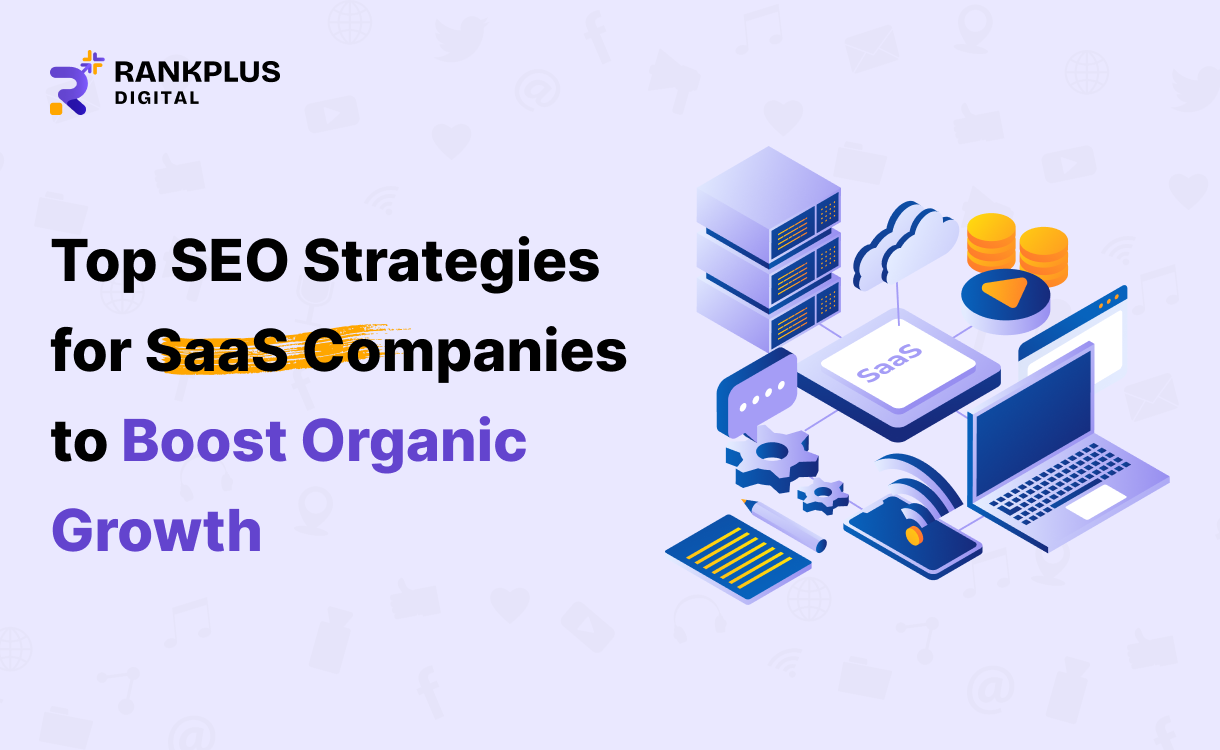
The SaaS market is among the most competitive online spaces, and during the process of attracting the high-intent users, the ranking on Google has become a necessity. Studies have indicated that 68 of SaaS purchasers initiate their decision-making process on a search engine, and therefore, SEO is an effective growth channel that keeps rising with time. Here, we would deconstruct the most effective SEO techniques to use as a SaaS business and how you can achieve consistent organic growth. You will understand how SaaS SEO functions, why it needs a unique strategy and what steps the best SaaS brands undertake to achieve traffic, sign-up, and conversion. These strategies can assist in scaling up whether you are targeting the global teams or niche industries.
What Is SaaS SEO?
SaaS SEO is the art and science of maximizing the organic visibility of software-as-a-service websites to draw high-intent users and get them to trial the product, via a demo or subscription. In contrast to conventional SEO, SaaS directions are deeply rooted in the solution of the user pain points by educational content and product-led materials. Since users of SaaS tend to research before getting into commitment, SaaS SEO focuses on the entire buyer experience: awareness, comparing, conversion. It is aimed at establishing trust in the first place and attracting visitors to adopt it in the long term.
How SaaS SEO Differs from Standard SEO
Problem-solving and education are the cornerstones of SaaS SEO as opposed to transactional keywords or direct sales, which is the central theme of standard SEO. The buyers of SaaS do not make purchases immediately, they visit blogs, tutorials, comparison lists, and demo materials. This implies that SaaS SEO should focus on the layered intent, starting with informational issues, all the way to the bottom-of-the-funnel competitor keywords. Having longer sales cycles, organic content will also have to deliver a recurrent value to convert the users.
Why SaaS Companies Need a Unique SEO Strategy
Recurring revenue models, simultaneous decision-makers, overloaded products are complex challenges that SaaS companies have to deal with. This necessitates or requires onboarding, retention and lifetime value, which is coordinated with SEO. Also, the competition in the SaaS markets is usually intense, and in that case, a brand ought to employ sophisticated content models to be different. The custom approach will make sure that your content is in the hands of the appropriate users on the appropriate level of their development.
Why SEO Is Critical for SaaS Growth
SEO is a tool that assists SaaS firms to establish a continuous acquisition pipeline that is not linked to high-budget advertising. Organic content is able to attract users even after it has been published and this saves the customer acquisition costs greatly. As SaaS customers are research-oriented, your site turns out to be the primary point of education and trust-building. Effective SEO means that during important research times, you will be visible and this will affect sign-ups and revenue expansion in the long term.
Core SEO Strategies for SaaS Companies
1. Develop a B2B SaaS SEO Strategy Framework
B2B SaaS SEO strategy should trace the whole buyer journey by performing a research on key words, planning the content, and technical optimization. The first thing to do is to find your target audience segments and get to know their issues. Create content around each of the pain points, incorporating product features into it. A framework assists you to scale your SEO activities on a regular basis as well as aligning with business objectives.
2. Build Topic Clusters Around Pain Points
Topic clusters enable SaaS businesses to obtain several related keywords, as well as enhance the structure of the site. Select fundamental issues with your audience and establish a pillar page backed up by elaborated subtopics. It is the indicator of power to Google and simplifies your content search. With time, the clusters develop a better ranking and gain topical authority in your niche.
3. Create High-Intent SaaS Content That Converts
High-intent content focuses on users who are close to making a decision. These include comparison pages, use-case tutorials, alternatives, and integration guides. Such content attracts visitors who are ready to sign up or explore demos. By answering specific queries linked to your product, you reduce friction and encourage immediate conversion.
4. Optimize for Search Intent First
Search intent determines why a user searches a keyword, and matching it is key to ranking. SaaS companies must distinguish between informational, commercial, and transactional content. A blog explaining “how to automate tasks” is very different from a “{tool} pricing” page. Aligning content with user goals improves engagement, time on page, and conversion rates.
5. Improve Technical SEO for SaaS Websites
Technical SEO is necessary so that your SaaS site loads quickly, is mobile, and can be crawled by search engines. Because SaaS websites do tend to have heavy JavaScript-based components, it is necessary to render them properly. Solving technical problems will enhance Core Web Vitals, which has a direct impact on rankings. The clean architecture also improves the user experience, decreasing the bouncing rate.
6. Build a Strong Internal Linking Structure
Internal links serve to share the power on your site and direct the visitors to valuable pages. In the case of SaaS, conversions and rankings are better with the inclusion of blogs on product features and use-case pages. Constant connecting also enhances crawling and assists Google to comprehend your web structure. Relate contextual relevance with the help of descriptive anchor text.
7. Invest in Backlinks That Build Authority
The backlinks are still one of the most powerful ranking factors of SaaS SEO. Find sites that are ranked as legitimate in the industry, SaaS review sites and resource pages to earn links. An excellent way of attaining natural links is to provide free tools, templates, or calculators. Good backlinks bring strength to your domain, and it will assist you in entering a high-populated SaaS markets.
8. Create Product-Led SEO Assets
The product-led SEO involves educational content that incorporates your product into a solution. This consists of templates, step-by-step manuals, automation workflow, and interactive demos. These are the resources that assist the visitors to know how your product addresses their real life challenges. These assets increase conversions since people are able to see the value instantly.
9. Rank for BOFU (Bottom-of-Funnel) Keyword
BOFU keywords are used to appeal to users who are in the process of comparing the solutions or are about to make a purchase. This is in the form of alternative, vs, and pricing keywords. The rate of conversion of these pages is much higher since users reach the last stage of decision at such pages. It is better to optimize the BOFU keywords and reach the high-intent traffic which is frequently missed by competitors.
10. Optimize Your SaaS Website for UX (Reduce Bounce Rate)
Smooth and easy user interface is a prerequisite of SaaS conversion. Quick pages, easy navigation, and valuable CTAs ensure that the visitors stay on. Holding down the bounce rate is an indicator to Google that your material is beneficial and it increases ranking as time goes by. A refined UX also helps to develop confidence and motivate more people to proceed.
SEO Strategy for Small Business SaaS
Target low-competition keywords first
Small SaaS companies should focus on long-tail, low-difficulty keywords that offer faster ranking opportunities. These keywords match very specific user problems, making traffic more relevant and conversion-ready.
Create content around problem-based and comparison queries
Topics like “best CRM for freelancers” or “Tool A vs Tool B” attract buyers who are already evaluating solutions — a shortcut to high-intent traffic and sign-ups.
Make small technical improvements for big gains
Even without a significant investment, solving simple problems such as page speed, Core Web Vitals, responsiveness to mobile devices, and image compression can significantly increase visibility.
Focus resources only on content with measurable ROI
Rather than publishing dozens of blogs, invest in content that will generate trials, demos or email sign-ups over the long term and is evergreen and bottom of the funnel.
Build a content system that compounds
Post regularly, internalize, refresh old posts, and update that makes Google consider your site as being actively updated.
The 4 Pillars of SaaS SEO
Technical SEO → The foundation of visibility
Ensures your website is fast, secure, mobile-friendly, and easy for Google to crawl. Without a clean technical setup, even great content struggles to rank.
Content → The engine that drives traffic and trust
There should be good quality blogs, landing pages, feature breakdowns, frequently asked questions, and comparison pages that can assist in the education of the users and direct them to registration.
On-Page Optimization → Makes every page search-friendly
It also has keyword positioning, title optimization, defined headers, internal links, schema markup, and explicit CTAs that are search intent-oriented.
Backlinks → Signals authority to search engines
Authoritative links to your SaaS product and content signal to Google that your product and content is credible, and increase your ranking authority throughout the site.
All pillars work together as a system
When done consistently, these four elements create sustainable organic growth that keeps driving traffic even when paid ads stop.
H2: What Is the 10X Rule for SaaS?
Create content 10x better than top-ranking pages
- It involves doing more than length – providing more insights, better explanations, more detailed images, and steps of actions, compared to the competitors.
Use unique data, examples, and expert-backed insights
- You can add your product information, customer results, diagrams, snapshots, and real-life examples to make your content more memorable.
Avoid rewriting what already exists
- Rather than imitating the bloggers of rivals, present new viewpoints, fresh information, original statistics, and more value-driven descriptions.
Focus on engagement and usefulness
- Google will favor content that makes users stay and read, to minimize the bouncing rates, and search intent fulfillment.
Critical for SaaS where competition is intense
- As dozens of products compete against each other using the same keywords, 10X content will make your brand appear more authoritative, trustworthy, and conversion-ready.
End note
SEO enhances SaaS companies as a growth engine in the long run has compounded benefits and low customer acquisition costs. Through technical optimization, high-intent content, product-led search engine optimization, and robust internal structure, you place your SaaS brand in a way that allows it to experience a high level of organic visibility. These strategies will provide trust, bring in skilled users, and assist in the generation of recurrent income. It doesn’t matter whether you are a startup or a growing organization, but having the right foundation and optimization is the key.

Narendra Patel
Narendra Patel is a results-driven digital marketing strategist who blends creativity with sharp analytics. From boosting search rankings to crafting high-impact ad campaigns, he helps businesses stand out and succeed in today’s competitive digital landscape.