SEO Has Entered a New Era
The present state of SEO requires more advanced approaches than keyword research and algorithm exploitation. SEO initially used ranking manipulation techniques, which involved excessive keyword usage and backlink creation, and machine optimization instead of human-centered design. The search system has developed into its current form. Modern SEO practices require websites to deliver proper user intent through their actual expertise and their authentic online content. The shift between new seo vs old seo 2026 reflects how search has evolved toward real value.
The operational methods of businesses are going to change due to advanced ranking technologies, conversational search methods, and search systems (which use AI). Moving from “Old SEO” to “New SEO” entails technical changes (but also requires new standards for trust, authority, and value generation). This paper will show 2 paths that can be developed by comparing and contrasting traditional vs. modern methods of search engine optimization. This will help brands continue to stay visible in the intelligent search environment of 2026 and align with the future of seo.
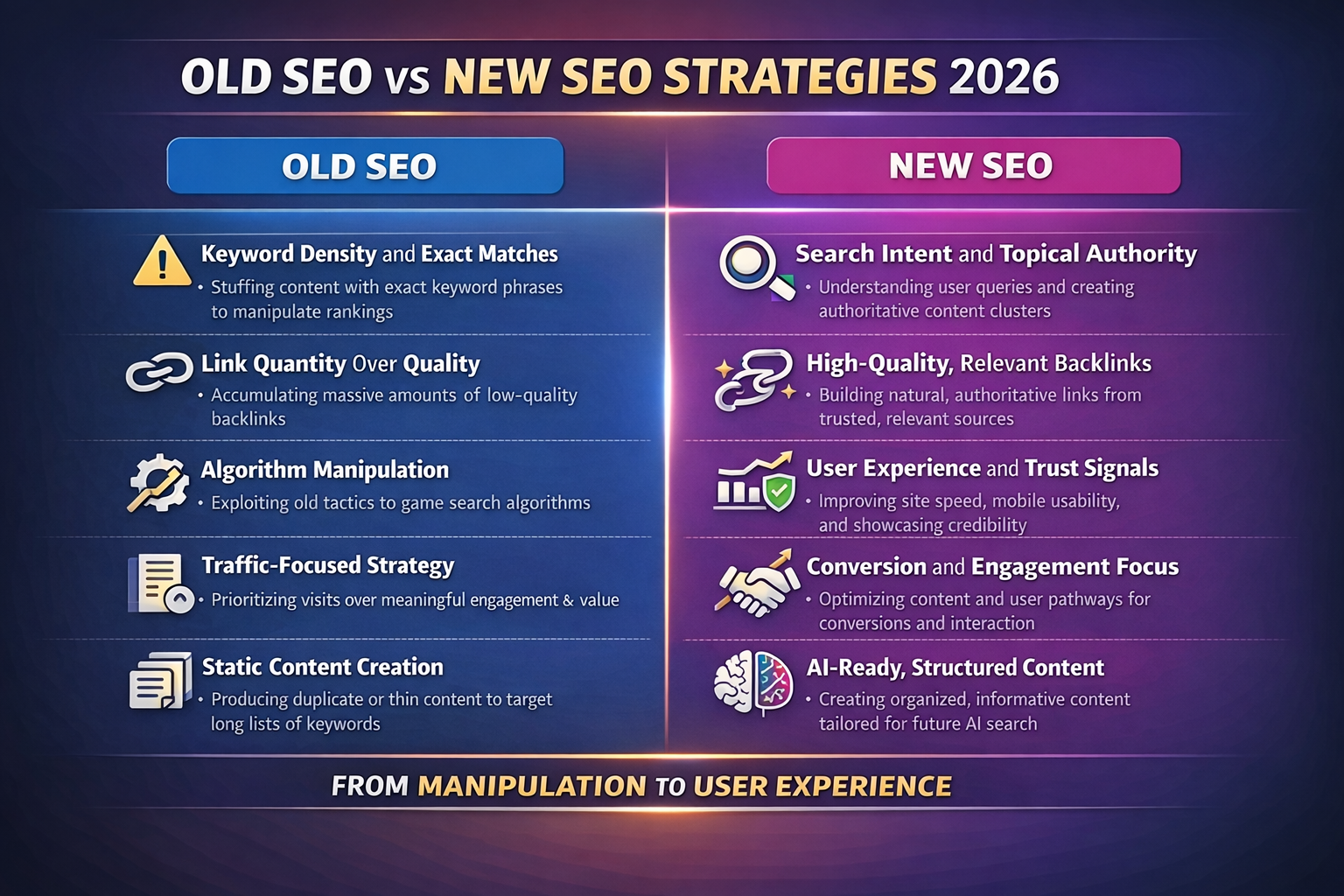
Old SEO vs New SEO in 2026
Old SEO
- Keyword density and exact matches
- Link quantity over quality
- Algorithm manipulation
- Traffic-focused strategy
- Static content creation
New SEO
- Search intent and topical authority
- High-quality, relevant backlinks
- E-E-A-T, UX & Trust Signals
- Conversion and engagement focus
- AI-Ready Content & Answer Engine Optimization
Part I: The Era of Old SEO (The Golden Age of Manipulation)
Search engines needed both keywords and link signals to operate their systems more than ten years ago. Websites used manipulation tactics because they could predict ranking results from their algorithms. The strategies that worked for short-term success have become obsolete because they now create negative effects and do not align with latest seo techniques 2026.
1. Keyword Stuffing
The Old Strategy:
SEOs believed repeating keywords increased relevance. Key phrases had been sprinkled into every sentence, heading, and alt tag.
The Modern Reality:
Using Natural Language Processing (NLP), search engines can now grasp the context of what is written about on a website. If a site’s content has been optimised too much, there is likely something missing from it in terms of quality. The three pieces of today’s SEO include: having well-written, thorough content; being an expert on something; and having authority.
2. Link Spamming
The Old Strategy:
Authority metrics were inflated by the use of link farms, private blog networks, and directory submissions.
The Modern Reality:
It’s a fixed asset and offers higher value than a link drawn from a web directory. The process of sustainable link building now depends on digital PR efforts, which include brand mentions and genuine partnership agreements.
3. Cloaking and Hidden Text
The Old Strategy:
So-called “cloaked” websites displayed different content to search engines than to users; others hid their content behind a matching background color.
The Modern Reality:
To avoid any penalties, you should always be honest about what you are doing and provide a consistent experience for crawlers as well as users; failure to do so can result in very serious consequences (such as being removed from the search engines altogether).
4. Thin and Duplicate Content
The Old Strategy:
Creating many low-value pages targeting slight keyword variations was common.
The Modern Reality:
Modern algorithms reward original, helpful content. Pages must provide unique insights, depth, and real value to compete in evolving ai seo trends.
5. Exact-Match Domains (EMDs)
The Old Strategy:
Domains containing keywords are often ranked quickly regardless of content quality.
The Modern Reality:
Authority and credibility in terms of brand have become more important than having keyword-specific URLs. The significance of branding far outshines the specificity of naming during this period.
Part II: The Great Shift — From Algorithms to Audience
The most significant change in SEO happened when search engines started to evaluate user contentment instead of allowing users to bypass system controls. Modern SEO now asks How do we help? instead of its previous question about ranking methods. Key pillars driving this shift reflect modern seo strategy 2026:
Search Intent:
Knowing the reason behind user searches allows users to search for information, navigate websites, complete transactions, and conduct commercial research.
User Experience (UX):
Websites must load quickly and have optimized mobile access to achieve maximum visibility online.
Trust and Authority:
Expert and trusted brands will rank higher in the search engine results.
Part III: The Pillars of New SEO (2026 Strategies)
1. The E-E-A-T framework functions as a standard method that evaluates the quality of content.
- Experience: The value of firsthand knowledge and actual case studies
- Expertise: The creation or evaluation of content by qualified subject matter experts.
- Authoritative sources: The ability of a source to gain recognition in its specific field of expertise.
- Trustworthiness: The presence of secure websites, together with open policies and correct information.
How to Build E-E-A-T:
- Include real author bios and credentials.
- Reference credible data sources.
- Strengthen brand reputation through PR and mentions.
- Maintain HTTPS security and clear privacy policies.
2. Topical Authority and Content Clusters
Modern SEO focuses basically on covering topics in-depth instead of targeting single keywords. This shift between old seo vs new seo strategies emphasizes building authority instead of chasing isolated rankings.
Strategy:
- Create a broad pillar page around a core subject.
- Develop supporting articles that explore specific subtopics.
- Interlink related content to demonstrate subject expertise.
In this way, the precursors allow search engines to really know that your website is designed to be a trustworthy authority.
3. Core Web Vitals and User Experience
User experience is officially a direct factor of ranking, whereas Core Web Vitals pay heed in mapping real-world performance:
- LCP: Main content loading speed
- INP: Interaction responsiveness
- CLS: Layout stability
Modern Approach:
- Run regular performance audits.
- Optimize images and scripts.
- Prioritize mobile-first design and accessibility.
4. Search Intent Optimization
The preeminence of a keyword has been eliminated; there are merely too many who could outwit it.
- Informational: Guides, tutorials, and educational content.
- Navigational: Brand visibility and easy site navigation.
- Transactional: Product pages optimized for conversion.
- Commercial Investigation: Comparisons and reviews.
Each side should serve a clear purpose to meet a user-specific need.
Part IV: The Future of SEO — AEO, GEO, and AI-Driven Search
1. AEO (Answer Engine Optimization)
AI Overviews and generative search results now deliver direct answers instead of just links.
Strategies:
- The content needs to deliver answers that are both clear and brief.
- The content requires Dean Martin and The Taming of the Shrew to create structured headings and FAQ sections.
- The content needs E-E-A-T signals, which show strong expertise in educational content development.
2. Generative Search and AI-Driven Results
AI systems show a growing ability to summarize and synthesize information based on data from reliable sources. The upcoming period requires businesses to discover their optimal operational methods for achieving upcoming objectives aligned with the future of seo.
Future Optimization:
- Structure content logically with clear sections.
- Use factual, well-organized data.
- Become a definitive source within your niche.
3. The Human Element in a Machine World
In a world of ever-increasing AI-based content, information, and insights derived from authentic humankind has become super expensive.
Focus Areas:
- Original research and unique perspectives.
- Real experiences and expert commentary.
- Strong brand identity and trust signals.
Final Thoughts — The Real Difference Between Old SEO and New SEO
SEO in 2026 is no longer merely about trying to trick search engines; it’s all about helping others by providing true value. In order to maintain longevity in the “search” world (both human and AI), those who are extremely focused on providing help, building trust, and developing a positive user experience will be able to continue to attract long-lasting traffic. The evolution of new seo vs old seo 2026 shows how modern optimization has moved from manipulation to meaningful engagement
The implementation of E-E-A-T standards, together with search intent optimization and answer engine preparation, will create a permanent digital asset through SEO that establishes trust as its foundation for brands.

Narendra Patel
Narendra Patel is a results-driven digital marketing strategist who blends creativity with sharp analytics. From boosting search rankings to crafting high-impact ad campaigns, he helps businesses stand out and succeed in today’s competitive digital landscape.